Quick Summary: The IRS increased the basic standard deduction for the 2026 tax year to adjust for inflation. Single filers and married taxpayers filing separately can deduct $16,100 (up from $15,750 in 2025), married couples filing jointly can deduct $32,200 (up from $31,500), and heads of household can deduct $24,150 (up from $23,625). Filers aged 65 or older and those who are legally blind receive an additional standard deduction ($1,650 for joint filers, $2,050 for single filers). Taxpayers should evaluate whether their total Schedule A itemized deductions exceed these new threshold limits before deciding to itemize.
Navigating the 2026 IRS Standard Deduction Increases & Itemizing Thresholds
Each tax year, the IRS adjusts the standard deduction to account for consumer price index changes and inflation. For the 2026 tax year, these inflation adjustments increase the baseline amount of income taxpayers can shelter from federal income tax without needing to itemize expenses.
Understanding your exact standard deduction threshold is critical when evaluating whether to take the flat deduction or itemize medical expenses, state taxes, mortgage interest, and charitable contributions on Schedule A.
Here is a breakdown of the 2026 federal standard deduction amounts across all filing statuses, additional senior and blindness allowances, and strategic itemizing benchmarks.
1. 2026 Federal Standard Deduction Breakdown by Filing Status
The IRS increased basic standard deduction amounts across all primary filing statuses:
| Filing Status | 2025 Standard Deduction | 2026 Standard Deduction | Year-over-Year Increase |
| Single | $15,750 | $16,100 | +$350 |
| Married Filing Jointly | $31,500 | $32,200 | +$700 |
| Married Filing Separately | $15,750 | $16,100 | +$350 |
| Head of Household | $23,625 | $24,150 | +$525 |
| Qualifying Surviving Spouse | $31,500 | $32,200 | +$700 |
2. Additional Standard Deductions for Seniors (65+) & Blind Taxpayers
Taxpayers who are age 65 or older or legally blind by the end of the tax year qualify for an additional standard deduction amount on top of their basic allowance:
- Single or Head of Household: Receive an additional $2,050 per qualifying condition (age 65+ or blindness). An unmarried filer who is both 65+ and legally blind receives a $4,100 total boost.
- Married Filing Jointly or Separately: Receive an additional $1,650 per qualifying spouse per condition. If both spouses are 65 or older, they add $3,300 to their joint standard deduction.
Combining Age 65+ Allowances with the OBBBA Senior Deduction
Qualifying seniors aged 65 and older can stack this additional standard deduction directly on top of the temporary $6,000 OBBBA Senior Tax Deduction (for filers within MAGI phase-out limits). Read our dedicated guide on How Seniors Can Claim the Additional $6k Deduction.
3. Standard Deduction Rules for Dependents
For individuals who can be claimed as a dependent on another taxpayer’s return, the standard deduction is subject to statutory caps. For 2026, a dependent’s standard deduction cannot exceed the greater of:
- $1,350; or
- The dependent’s earned income plus $450 (up to the maximum basic standard deduction for their filing status).
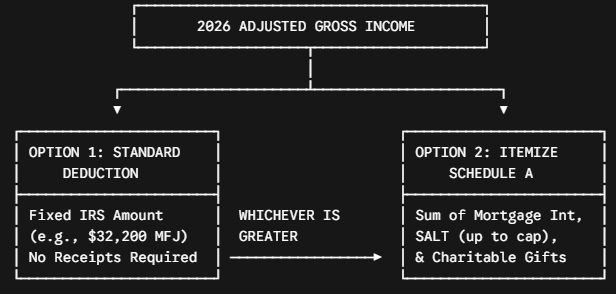
4. Standard Deduction vs. Itemized Deductions on Schedule A
To reduce taxable income effectively, taxpayers should choose whichever method yields the larger write-off.
Key Expenses That Count Toward Itemizing:
- State and Local Taxes (SALT): Income, real estate, and property taxes up to applicable legislative caps. See our breakdown of The Expanded $40k SALT Deduction Cap.
- Home Mortgage Interest: Interest paid on qualified acquisition debt (up to statutory mortgage limits).
- Medical and Dental Expenses: Unreimbursed qualifying medical costs that exceed 7.5% of Adjusted Gross Income (AGI).
- Charitable Contributions: Gifts and donations made to qualified 501(c)(3) public charities.
Optimize Your 2026 Tax Strategy Today
Determining whether to take the increased 2026 standard deduction or itemize your deductions requires evaluating property taxes, mortgage schedules, charitable gifts, and business entity structures.
At Moontree Tax Service, we assist high-net-worth individuals, small business owners, real estate investors, and retirees across Silicon Valley and California with comprehensive tax planning and filing.
Schedule a Tax Strategy Consultation Today or call us directly at (408) 475-2306.
Disclaimer: This article is intended solely for educational and informational purposes and does not constitute formal legal, accounting, or tax advice. Tax laws change frequently and apply differently based on individual financial profiles and transaction timing.